 10 Minutes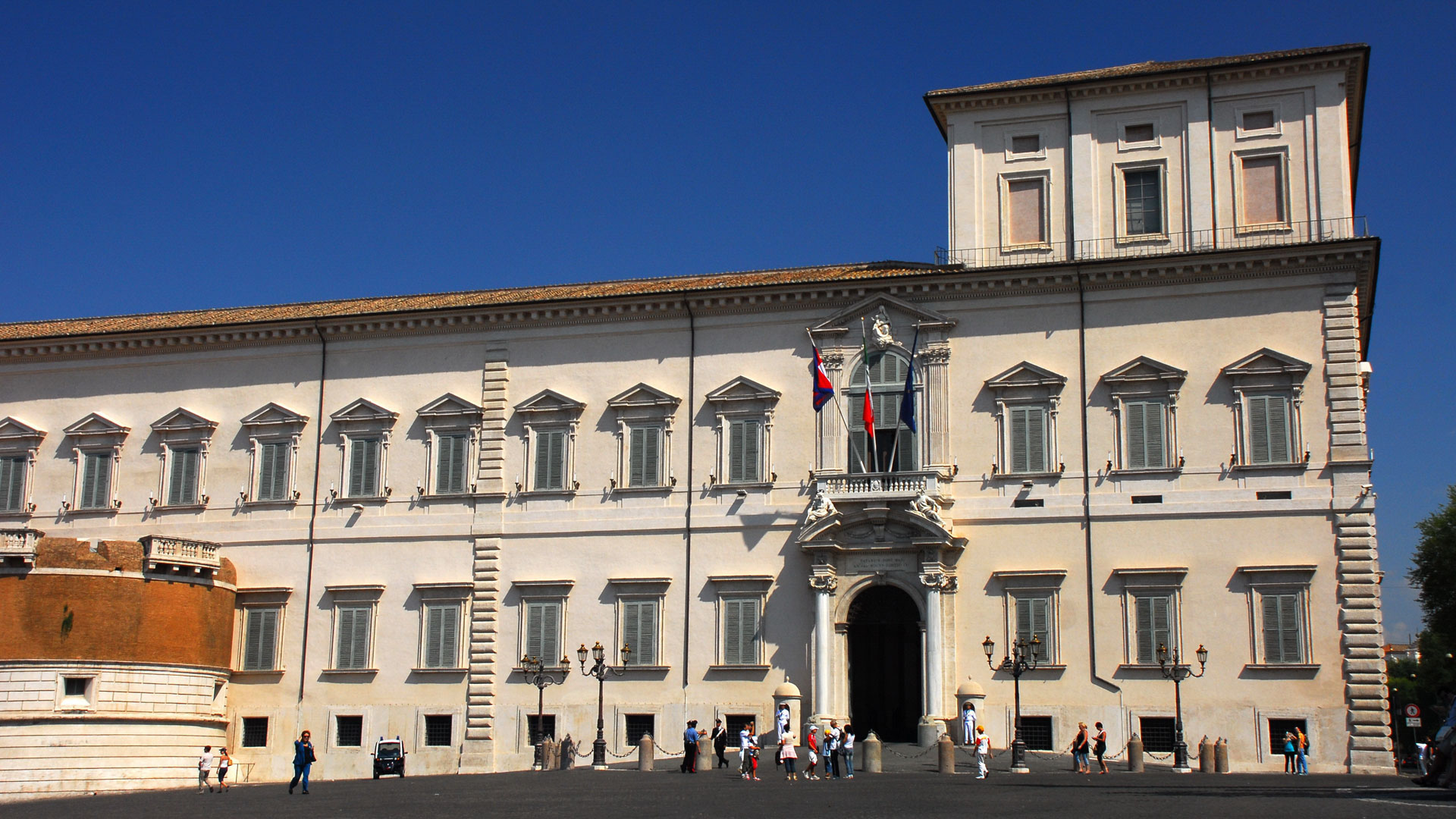
The square extends on the top of Monte Quirinale, the highest of the seven hills, so called because once there stood the temple of Quirino or the city of the Curi, where according to the legend, the Sabines of Tazio moved to come and settle on this high ground. In the center of the square, on high pedestals, stand the colossal statues of the Dioscuri, Castor and Pollux, the divine twins who hold their trampling horses by the bridle; the marble groups are Roman reworkings of the imperial age, of a Greek original of the fifth century BC
On the right side of the square, stands the facade of the sumptuous Palazzo della Consulta, erected in 1732 by Ferdinando Fuga, commissioned by Pope Clement XII for the court of the Sacra Consulta and today the seat of the Constitutional Court.
In the square, under the watchful eye of the imposing Corazzieri, stands the Palazzo del Quirinale which, since 1946, has been the symbolic place of the life of the Italian Republic and the seat of the Presidency of the Republic, after having been, for over three centuries, a summer residence. of the popes and then home of the kings of Italy.
The Palace stands in a place which, due to its elevated position and particular healthiness, has hosted residential nuclei and important public and cult buildings since ancient times, including the Temple of Serapis built by Caracalla in 217 AD, from which the sculptural group of the Dioscuri.
With an area of 110,500 square meters, it is the sixth largest building in the world, 20 times larger than the White House, and a place of tourist attraction for the beauty of its architecture, the work of Domenico Fontana, Carlo Maderno and Gian Lorenzo Bernini. , who here created the suggestive Loggia delle Benedizioni, and endowed with a unique heritage of art, history and culture.
Its art collections, famous all over the world, are made up of statues and ancient and modern paintings, tapestries of inestimable value, carriages from the precious manufacture, precious watches, the oldest examples of which date back to the time of Louis XIV, as well as from a very full-bodied porcelain collection, about 38,000 pieces, which can be considered among the most prestigious on an international level.
The immense artistic heritage is currently enriched by "Quirinale Contemporaneo", works of contemporary Italian art, signed by the great names of the twentieth century: 36 paintings and sculptures by the most important artists and 32 objects, conceived by Italian designers and products by Italian companies, they have found a stable position in the courtyards, halls and gardens of the Quirinale. Among the prominent names of the new permanent collection: Giorgio de Chirico, Lucio Fontana, Arnaldo Pomodoro, Giacomo Manzu ', Afro, Alberto Burri, Carla Accardi and Giosetta Fioroni. Among the designers: Gio Ponti, Piero Fornasetti, Franco Albini, Achille and Pier Giacomo Castiglioni, Vico Magistretti, Carlo Mollino, Gae Aulenti, Gaetano Pesce, Alessandro Mendini and Cini Boeri.
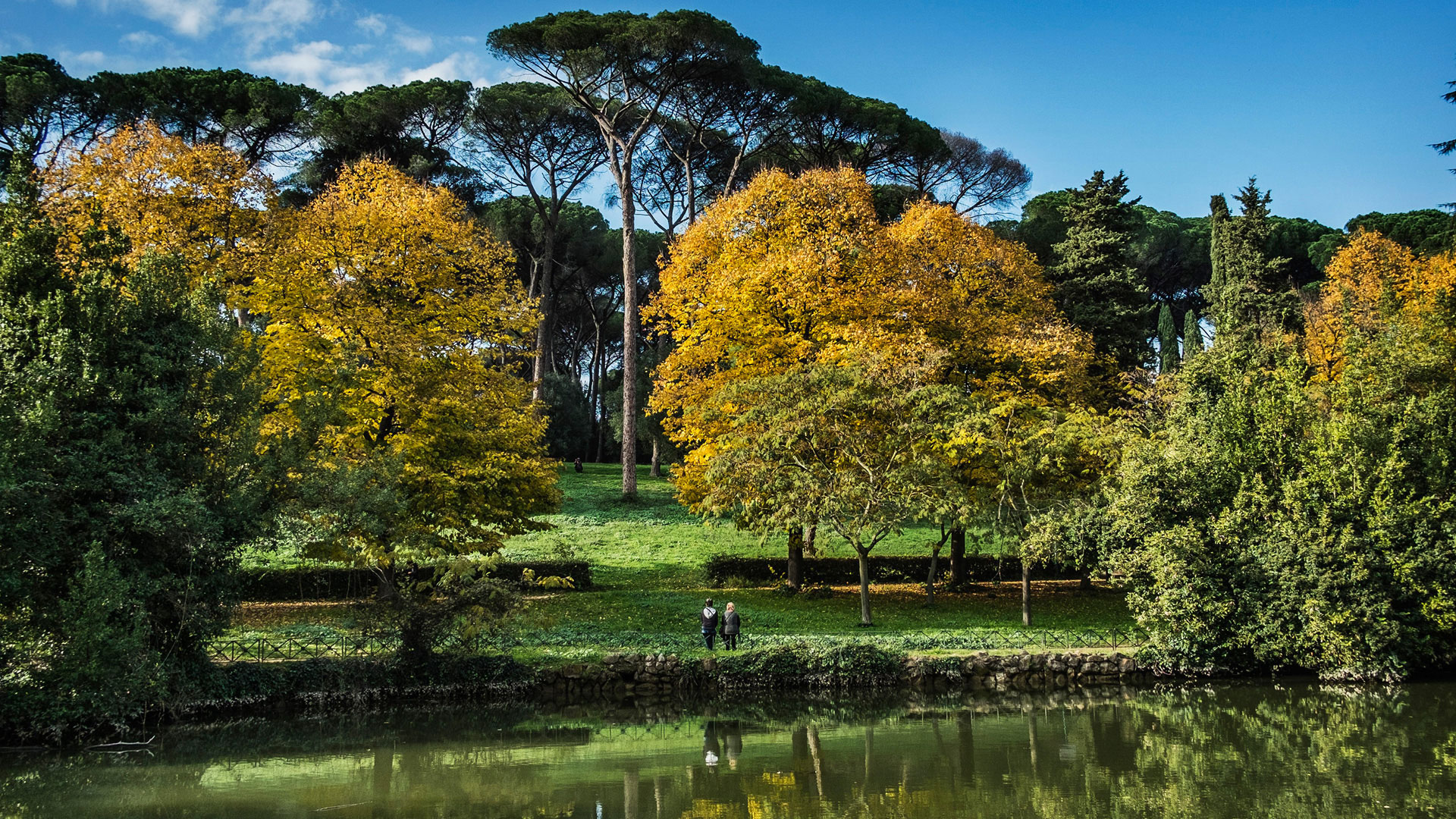
Do not miss the extraordinary gardens of about 4 hectares dating back to the sixteenth century that invite the visitor to stroll among their geometric flower beds, the rich collection of tree species, the high hedges and even a dense grove with wide avenues and enchanting pergolas. In one of the park's viewpoints is the elegant Coffee House, built by the architect Ferdinando Fuga in the 18th century, from whose terrace you can admire the 16th-century Organ Fountain, whose mechanism, although modernized, is still perfectly working.
One of the most awaited moments by tourists and citizens is the changing of the guard performed every Sunday by the Corazzieri, one of the most prestigious and spectacular armed escorts in the world, with the musical accompaniment of the Band of the Guardia di Finanza.