 40 Minutes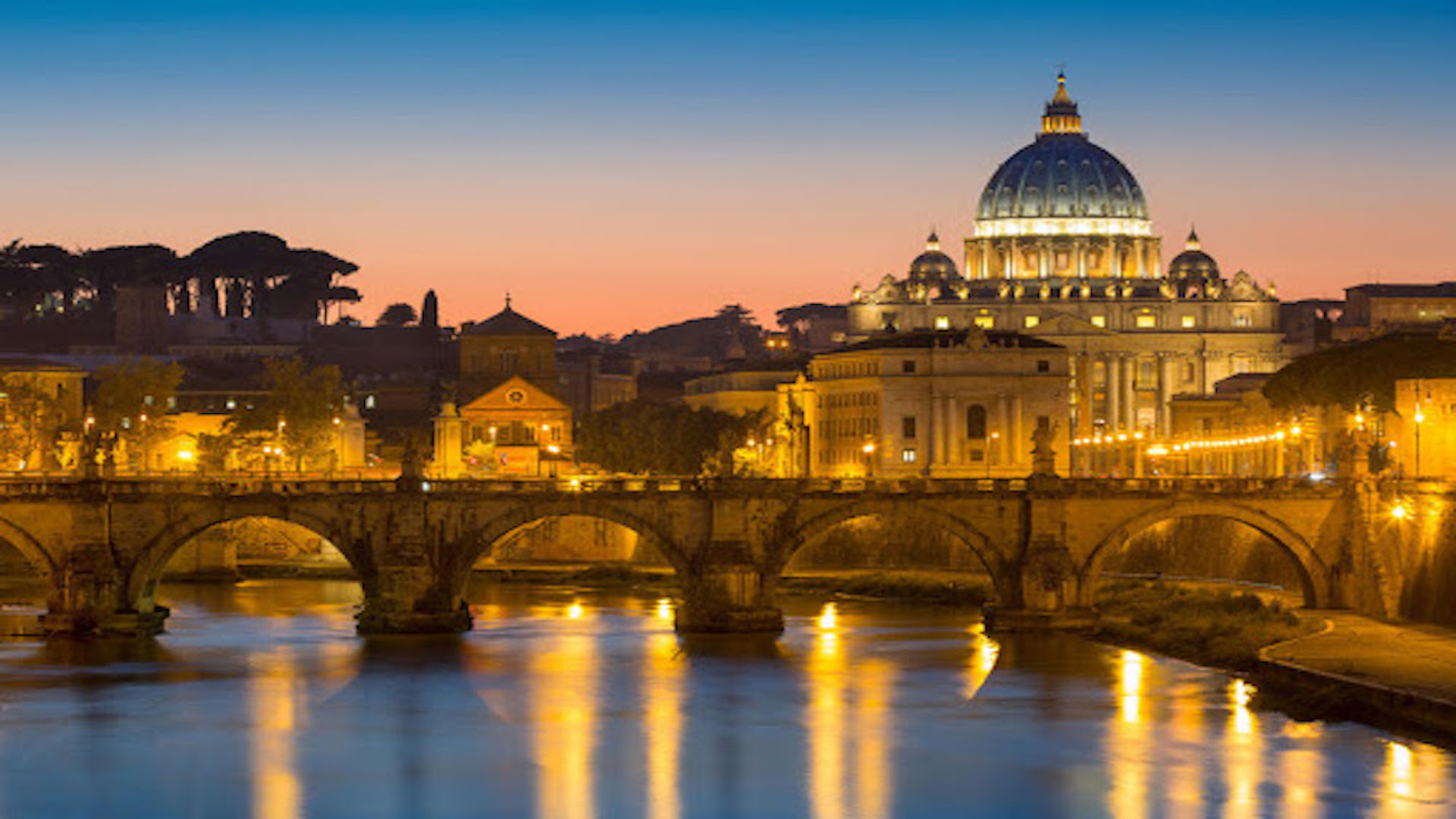
The primitive Basilica of San Pietro, a building comparable in size to the present one, was erected around 320 by the emperor Constantine, in the place where, according to tradition, the apostle Peter had been buried.
From the middle of the 15th century that long process began which, in about two hundred years and with the help of many artists (Bramante, Michelangelo, Bernini), would have led to the complete reconstruction of the primitive Constantinian basilica.
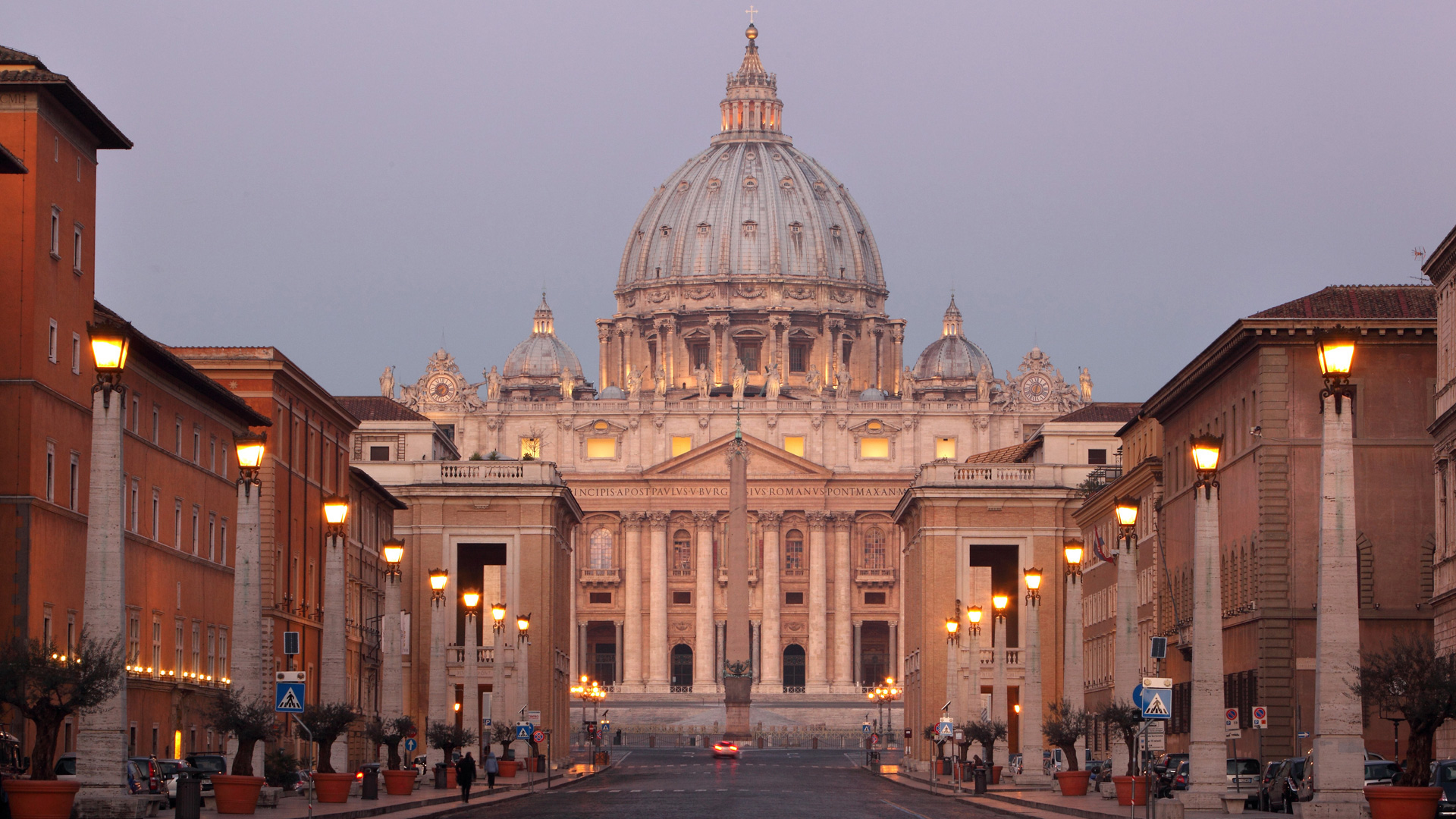
Even the current Piazza San Pietro with the splendid colonnade presented itself in a completely different form: today's appearance is a true masterpiece by Gian Lorenzo Bernini.
The imposing seventeenth-century facade by Carlo Maderno gives an idea of ​​the exceptional size of the Basilica, still today one of the largest churches in the world. 115 meters long and preceded by a three-tiered staircase, the facade has pilasters and Corinthian columns and is surmounted by an attic crowned by thirteen colossal statues.
At the center is the Loggia delle Benedizioni: from here the pope blesses the faithful on the most solemn occasions and the election of each new pontiff is announced to the world. The Holy Door, whose opening officially begins the Holy Year, is the last on the right.
Designed by Michelangelo and completed by Della Porta and Fontana in 1588-89, the dome is surprising for its size and harmony, characteristics that can be appreciated in the demanding but rewarding climb that allows you to discover its construction secrets. Arrived on the terrace, the scale of 330 steps leads to a circular interior corridor, from which you can see from near the mosaics made by Cavalier d'Arpino in 1605.
Entering the basilica, in the first chapel of the right aisle is admired the most famous of masterpieces contained inside San Pietro, Michelangelo's Pietà (1498-99): a marble work, created by the artist at the age of 23, has been enchanting for centuries for its technical perfection and emotional impact.
At the center of the Basilica, above the papal altar, stands the bronze Baldacchino by Bernini, commissioned by Urban VIII Barberini, with the gigantic twisted columns, among whose tendrils the Barberini bees, symbol of the family, rest.
On the marble bases that support the columns the face of a woman is depicted seven times, from conception to the birth of a child, depicted in the last frieze. It is a work of the young Borromini to magnify the Mater Ecclesia, the Mother Church of all the other churches. In Maderno's Confession below, 99 perennial lamps illuminate Peter's tomb.
On the apse wall, the Chair of St. Peter, which is not actually visible, is kept inside a majestic Baroque composition, created by Bernini. The large case is in gilded bronze, 7 meters high, supported by bronze statues depicting the Doctors of the Greek and Latin Church. Above, a riot of angels and cherubs, among clouds and darting rays, filtered by the light of the oval window with white and yellow glass on which stands the dove, symbol of the Holy Spirit.
Among the most important monuments, the tomb of Pius VII in the Clementine chapel, the work of Bertel Thordvaldsen; the gilded bronze tomb of Innocent VIII, built by Pollaiolo (1498), the oldest of the funerary monuments in the basilica; the monument to Urban VIII by Bernini; the monument to Clement XIII by Antonio Canova (1784-92), and the funerary stele known as Monumento Stuart, by Antonio Canova.
Inside the Basilica, there is the Museum of the Treasure of St. Peter's Basilica. Of great historical and artistic interest, the itinerary develops in nine exhibition rooms with unique works dating from the 4th to the 19th century, arranged according to a chronological criterion, and houses sacred vestments and precious objects offered for devotion to the Vatican Basilica.
Particularly interesting are a ciborium by Donatello, the "Monumento a Sisto IV" by Pollaiolo, the cross and gilded silver candelabra by A. Gentili (1582), the "Sarcophagus of Giunio Basso" (4th century), the Vatican Crux, or Cross of Emperor Justin II (6th century), a historiated dalmatic from the Early Middle Ages, a rooster in gilded metal (9th century) that adorned the bell tower of the first Constantinian Basilica.
An integral part of the Basilica are the Vatican Grottoes, located between the floor of the Constantinian basilica and the current one: here are the burials of many Popes, such as Pius XII, Paul VI, John Paul I and John Paul II. From the caves, in which chapels, statues, monuments and tombs follow one another, one enters the pre-Constantinian Necropolis. In this place, together with mausoleums of the II-IV century, there is a modest monument, but the foundation of the Church of Rome: the tomb of Peter.