 50 Minutes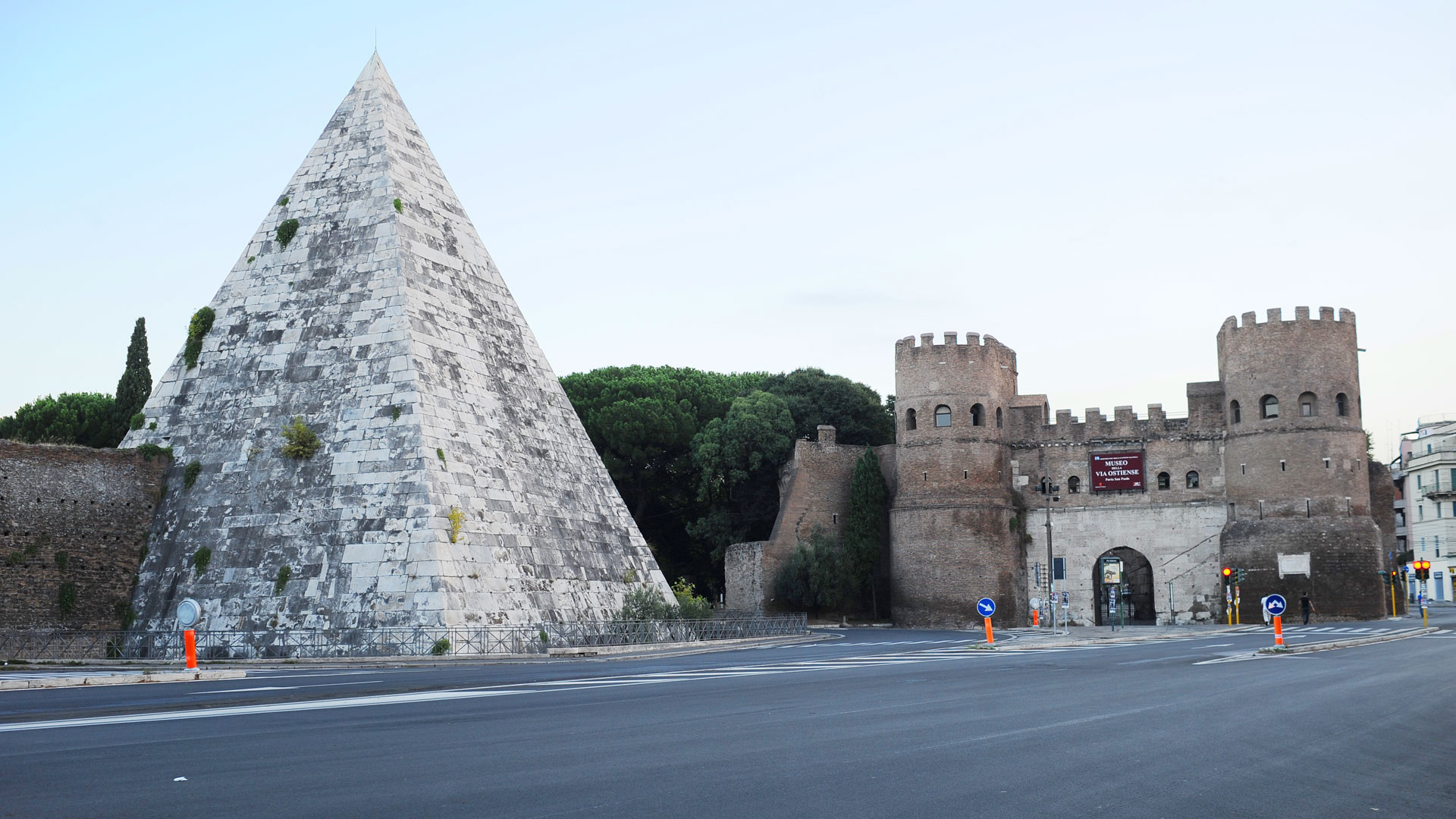
After the conquest of Egypt in 31 BC by Octavian Augustus, following the death of Cleopatra, the Roman funerary building began to be inspired by Egyptian models, giving life to a real fashion.
One of the characters who chose a pyramid as a sepulcher was Caius Cestius, praetor, tribune of the plebs and member of the College of the Septemviri Epulones, magistrates who had the task of organizing sacred banquets in honor of the most important divinities, as evidenced by one of the inscriptions on the facade. The façade has another inscription that tells us that the construction work had to last a maximum of 330 days, otherwise the family would lose the inheritance.
The tomb was built along the Via Ostiense, between 18 and 12 BC. Four centuries later, on the initiative of the emperor Aureliano, it was incorporated into the new city walls.
The structure is 36.40 meters high and has a square base of about 30 meters on each side. The external cladding is made up of Lunense marble slabs. The barrel-vaulted burial chamber is painted white, according to a paneled scheme, and decorated with refined frescoes with figures of nymphs and winged Victories holding a crown and a ribbon in their hands.
The first violation of the tomb probably dates back to the Middle Ages, through a tunnel dug on the northern side, which resulted in the loss of the cinerary urn and significant portions of the decoration.
The tomb was surrounded by an enclosure built with tuff blocks and by four columns corresponding to the four corners of the Pyramid.
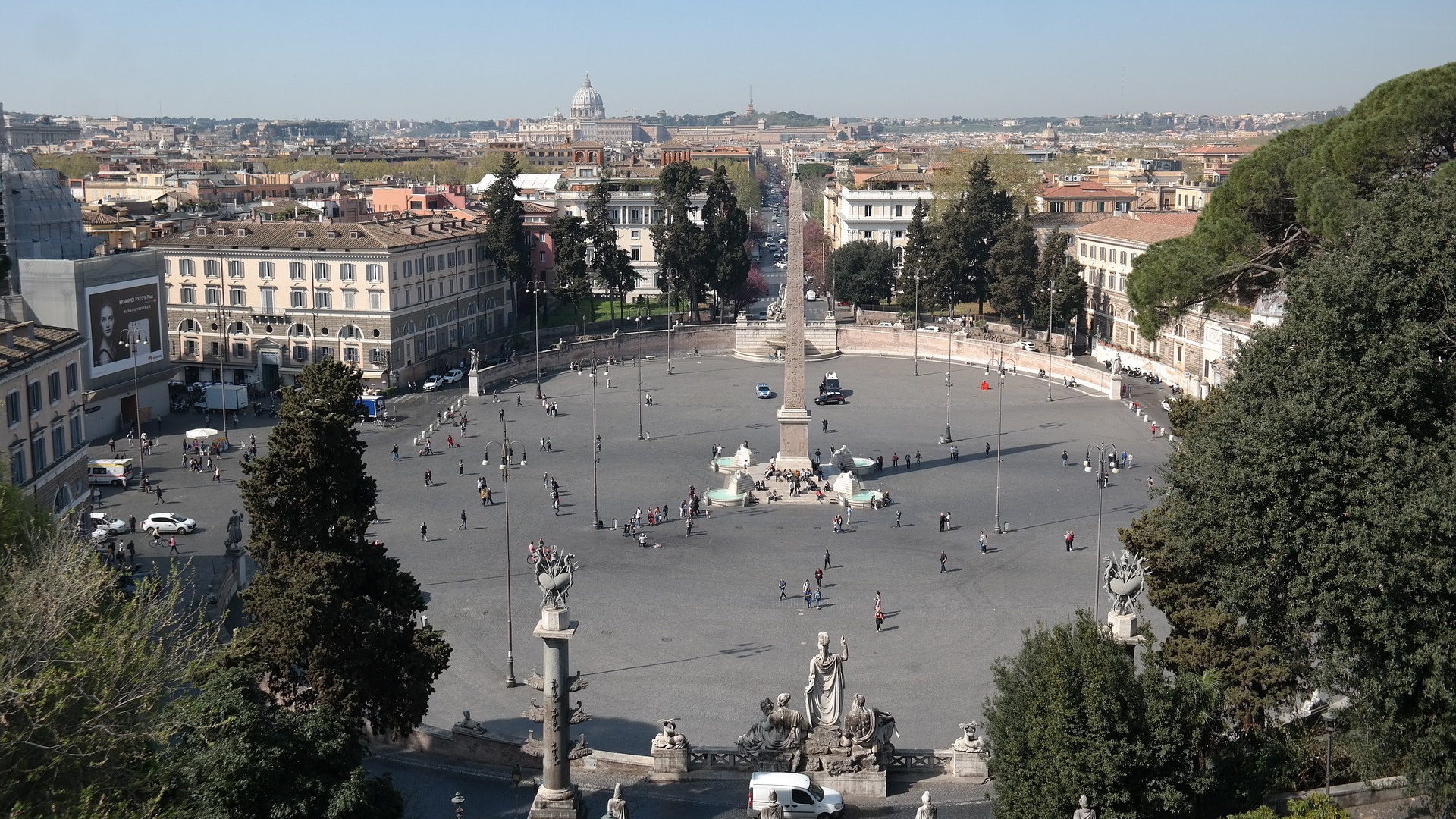
The Pyramid of Caius Cestius was not the only one present in Rome; in the first century. BC, in fact, there were two of them where today the twin churches of Piazza del Popolo stand, and a long Via della Conciliazione, indicated as Meta Romuli, which in 1499 was demolished by Pope Alexander VI Borgia, on the occasion of the imminent Jubilee.
It was at that time that the Pyramid of Cestius was mistakenly identified as the Meta Remi, the tomb of Remus, the twin brother of Romulus.
The inscription referring to Gaius Cestius Epulo swept away any doubts.