 20 Minutes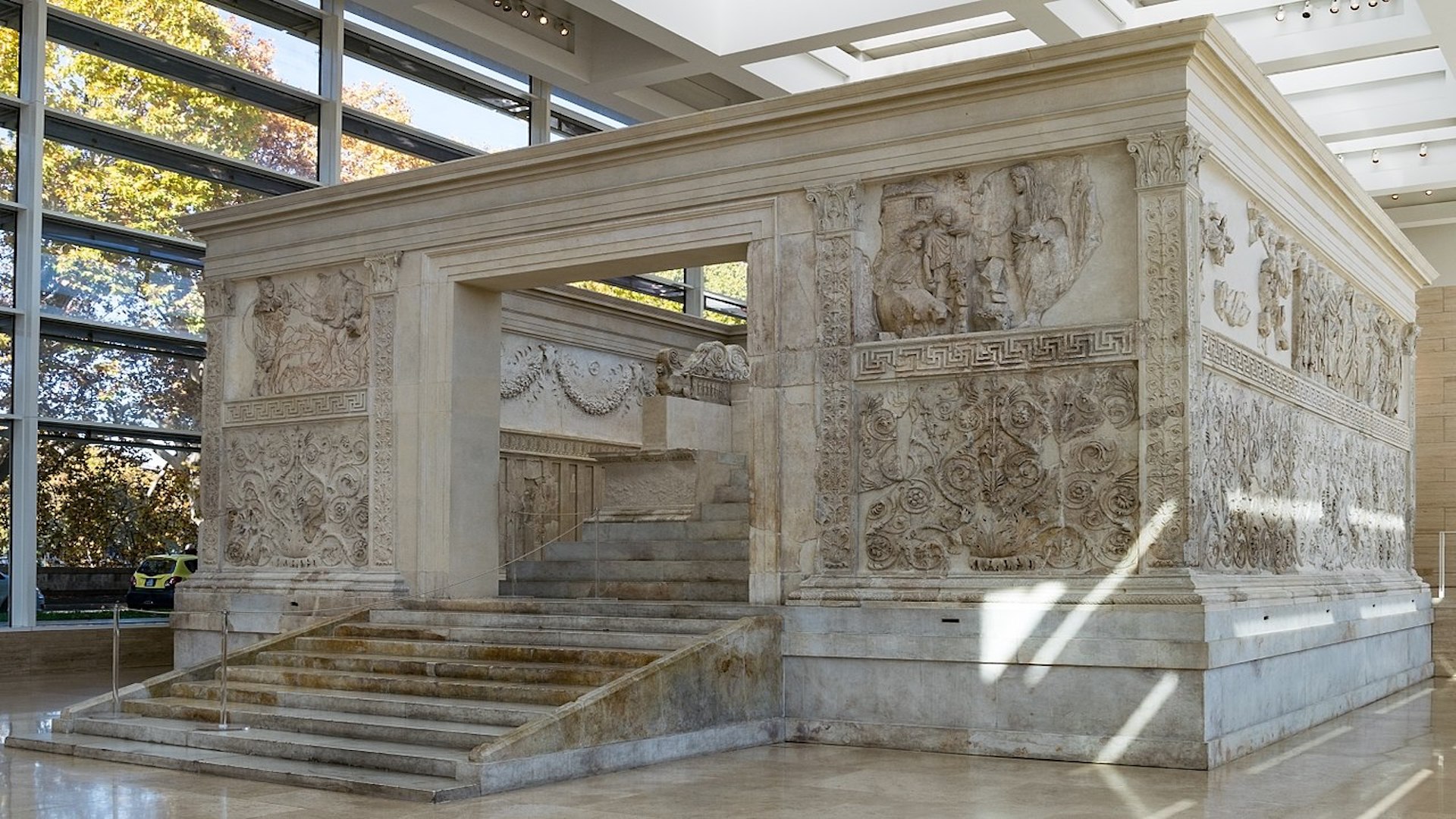
The Ara Pacis Museum represents the first architectural work created in the historic center of Rome from the fall of fascism to the present day. The project was drawn up by Richard Meier & Partners Architects, author of some of the most notable museums of the second half of the twentieth century.
The Ara Pacis represents one of the highest examples of classical art. Its construction was voted on by the Roman Senate in 13 BC to honor the return of Augustus from the provinces of Gaul and Spain where, over the course of three years, the emperor had consolidated the power of Rome and his staff, opened new roads and founded colonies.
The altar was built along the Via Flaminia, on the border of the northern Campo Marzio, but the alluvial nature of the area and the flooding of the Tiber, depositing layers of silt over the area, soon determined the burial of the Ara, of which memory was completely lost.
The reconstruction of the monument was decided in view of the anniversary, in 1937/8, of the two thousandth anniversary of the birth of Augustus.
Entrusted to the archaeologist Giuseppe Moretti, it was materially built in the summer of 1938 inside the pavilion in via di Ripetta, built in a hurry starting from a project by the architect Ballio Morpurgo.
The new museum complex was designed to create the most suitable conditions to guarantee the conservation of the monument both from an environmental point of view and in the anti-seismic system. The Museum periodically hosts temporary exhibitions in the spaces on the lower floor.