 25 Minutes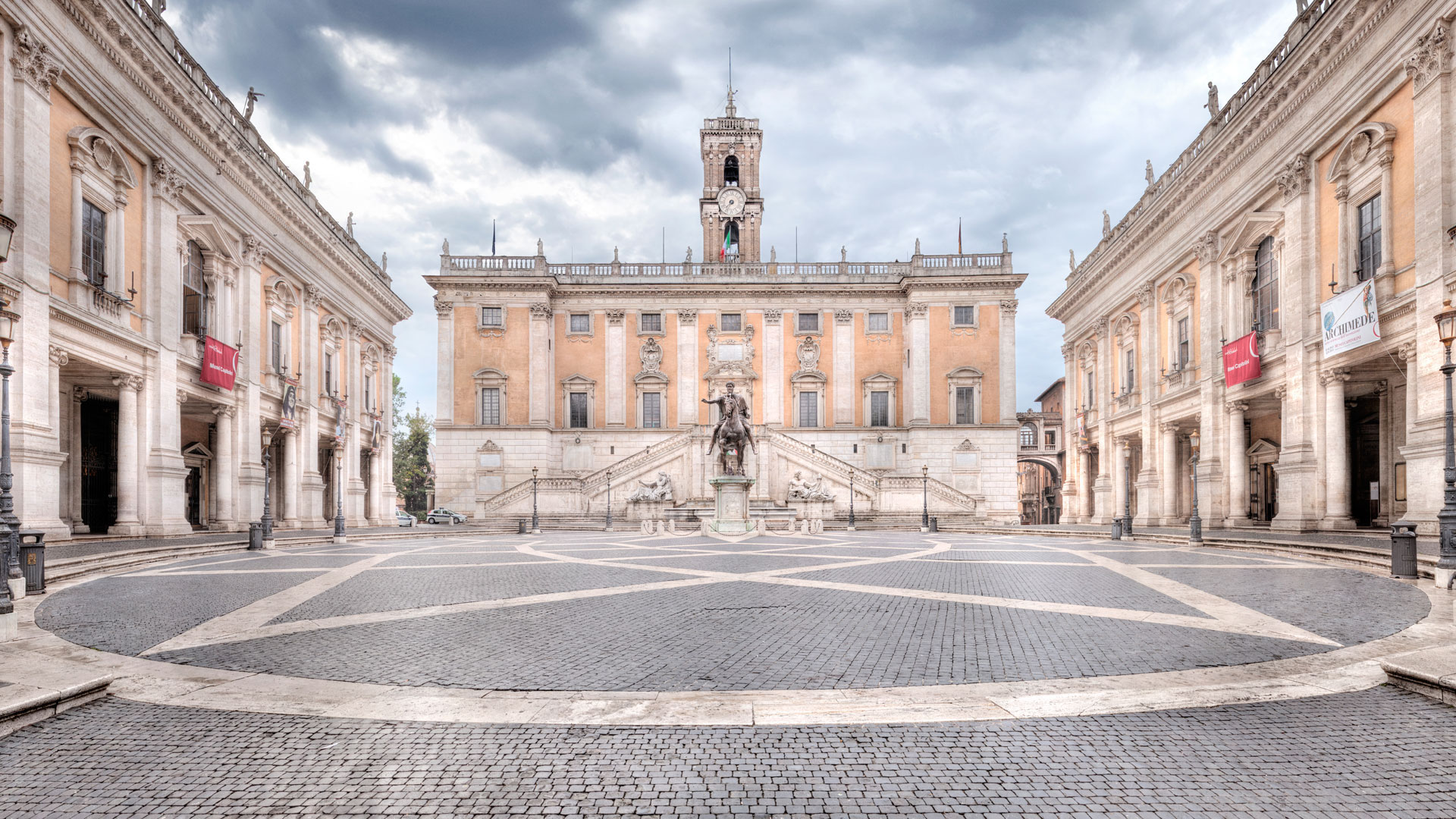
The first square that modern Rome has seen born according to the criteria of a uniform project, due to the genius of Michelangelo, stands on the Capitoline Hill (Capitolium), where an ancient village was located and a place chosen to dedicate numerous temples to the Roman gods.
In 1536, on the occasion of the visit to Rome of the Spanish Emperor Charles V, Piazza del Campidoglio underwent a series of transformations due to the serious state of abandonment in which the hill lay. Pope Paul III commissioned Michelangelo the overall arrangement of the square.
The Florentine architect created an elegant podium for the equestrian statue of Marcus Aurelius, placed in the center of the hill in 1537, so that this became the fulcrum of the new urban project.
Furthermore, Buonarroti designed an imposing staircase with large steps, the "Cordonata", which allowed an easy climb even for the knights, culminating with the solemn balustrade, surmounted by classic marble groups placed here in the following decades.
Around 1546, Michelangelo created the façade of the Palazzo Senatorio (background of the main view) which houses the City Council of the city, with a front staircase with two flights, frames of the splendid fountain. The bell tower of Palazzo Senatorio, built on a project by Martino Longhi the Elder in the last quarter of the sixteenth century, housed the famous patarina bell, taken in war by the Romans against the Viterbo people in 1200 and used to announce historical events or important circumstances, such as the election of the pontiff, his coronation or death, the passage of the papal procession. Today's bell dates back to the nineteenth century but continues to be called patarina and rings on the occasion of the birth of Rome on April 21 and the election of the mayor.
to Michelangelo we owe the renovation of Palazzo dei Conservatori and the beginning of a second building, Palazzo Nuovo (now home to the first public museum in the world opened in 1734, the Capitoline Museums) located opposite the first, in order to delimit square on three sides. The Palazzo Senatorio was completed after Michelangelo's death by Giacomo della Porta, while the second by Carlo Rainaldi. The works ended in 1655.
Despite the long period of time and the various architects, the Piazza del Campidoglio today presents an admirable stylistic unity.
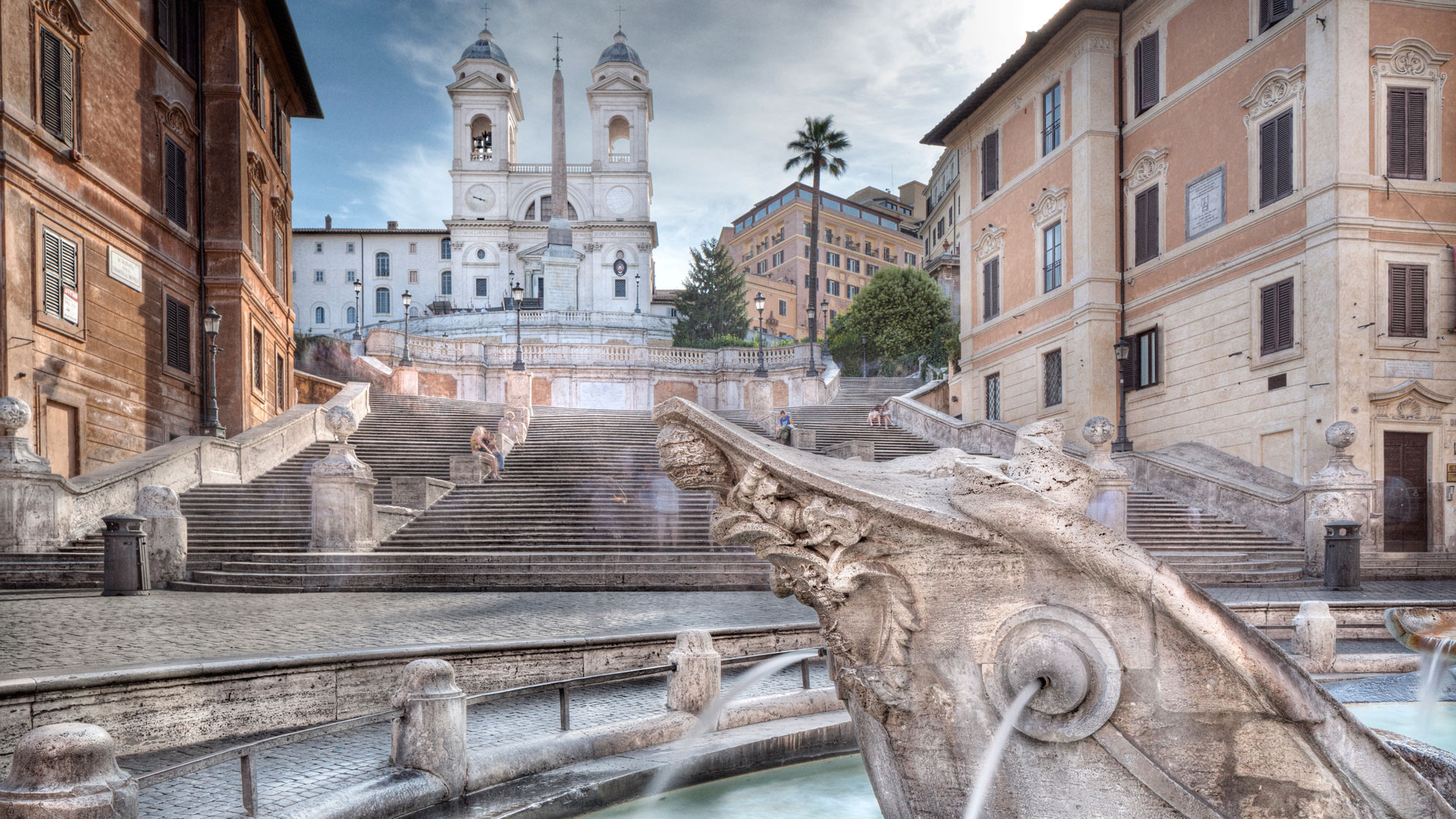
The term "barcaccia" refers to the boats used on the Tiber in the nearby port of Ripetta. Other inspiring reasons for the fountain are probably to be found in the news according to which there was a naumachia in the area - an outdoor building where naval games and battles with miniature warships took place - and in the floods of the Tiber, which dragged the boats to the foot of the Trinita 'de' Monti.