 25 Minutes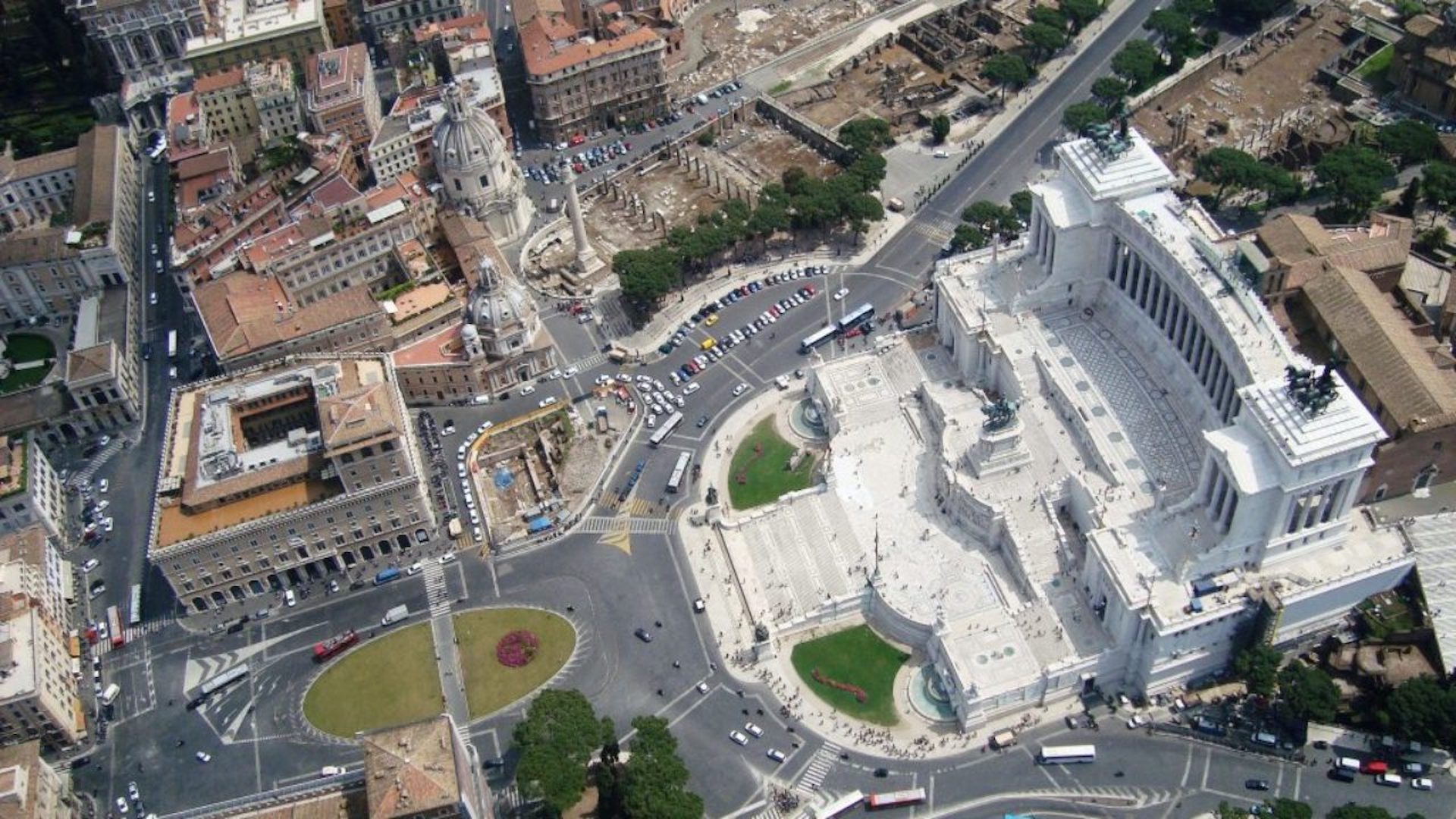
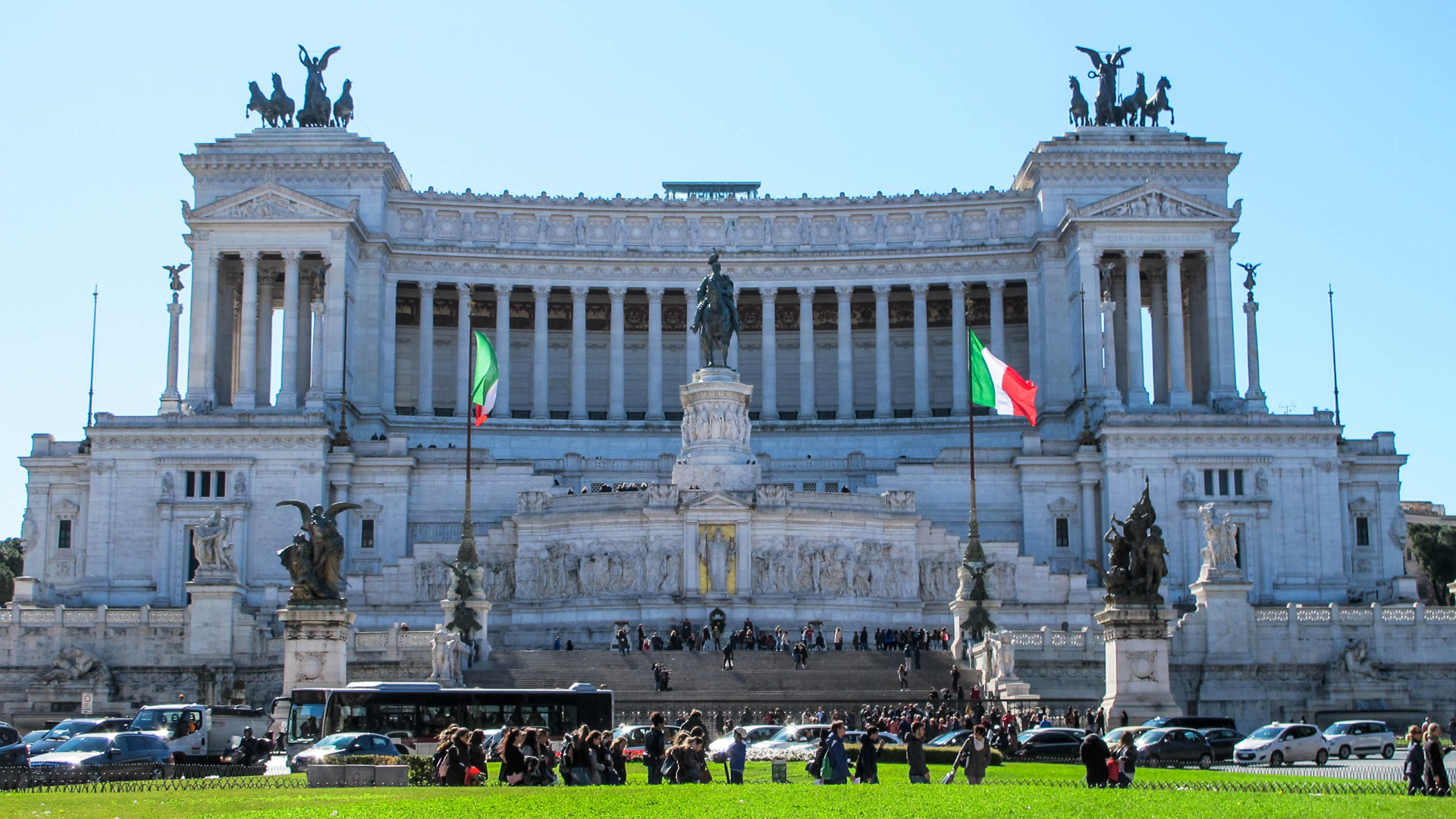
Piazza Venezia extends between Via del Corso and Via dei Fori Imperiali and derives its current form from the reconstructions of the area, which took place between the nineteenth and twentieth centuries, for the construction of the Monument to Vittorio Emanuele II. Work by Giuseppe Sacconi, winner of the competition, also known as Altare della Patria, it was begun in 1885 and completed by Gaetano Koch, Manfredo Manfredi and Pio Piacentini in 1911.
The architectural structure represents an ideal ascending path which, through stairways and terraces, enriched from sculptural groups and bas-reliefs, it rises up to the grandiose colonnaded portico surmounted by bronze quadrigas, allegories of the Unity of the Fatherland and of Liberty.
In 1921, the body of the Unknown Soldier was buried in the crypt designed by Armando Brasini.
The square takes its name from the fifteenth-century Palazzo built by Cardinal Pietro Barbo, then donated in 1560 by Pius IV to the Republic of Venice, which made it the seat of its embassy, ​​which is why it is still called Palazzo Venezia today.
Starting from the proclamation of Rome as Capital, and over the following decades, the whole area on the slopes of the Campidoglio was affected by the new urban layout which saw the demolition of the pre-existing medieval and Renaissance districts. The part called Palazzetto S. Marco was demolished to allow a view of the Vittoriano from Via del Corso and rebuilt in its current position on Piazza S. Marco.
Between 1929 and 1943, Palazzo Venezia was the seat of the Head of Government and of the Grand Council of Fascism: from his "historic balcony" Mussolini delivered his famous speeches. It should also be remembered that a part of the building incorporates the Basilica of San Marco and that in the corner between the Palace and the Palazzetto there is the bust of “Madama Lucreziaâ € ??, one of the famous Roman speaking statues.
Inside, there are the National Institute of Archeology and Art History and the National Museum of Palazzo Venezia which preserves works of various kinds and periods.
In addition to Palazzo Venezia, the Palazzo Bonaparte is preserved from the original layout of the square, where Napoleon's mother, Letizia Ramolino, lived from 1818 until her death.