 30 Minutes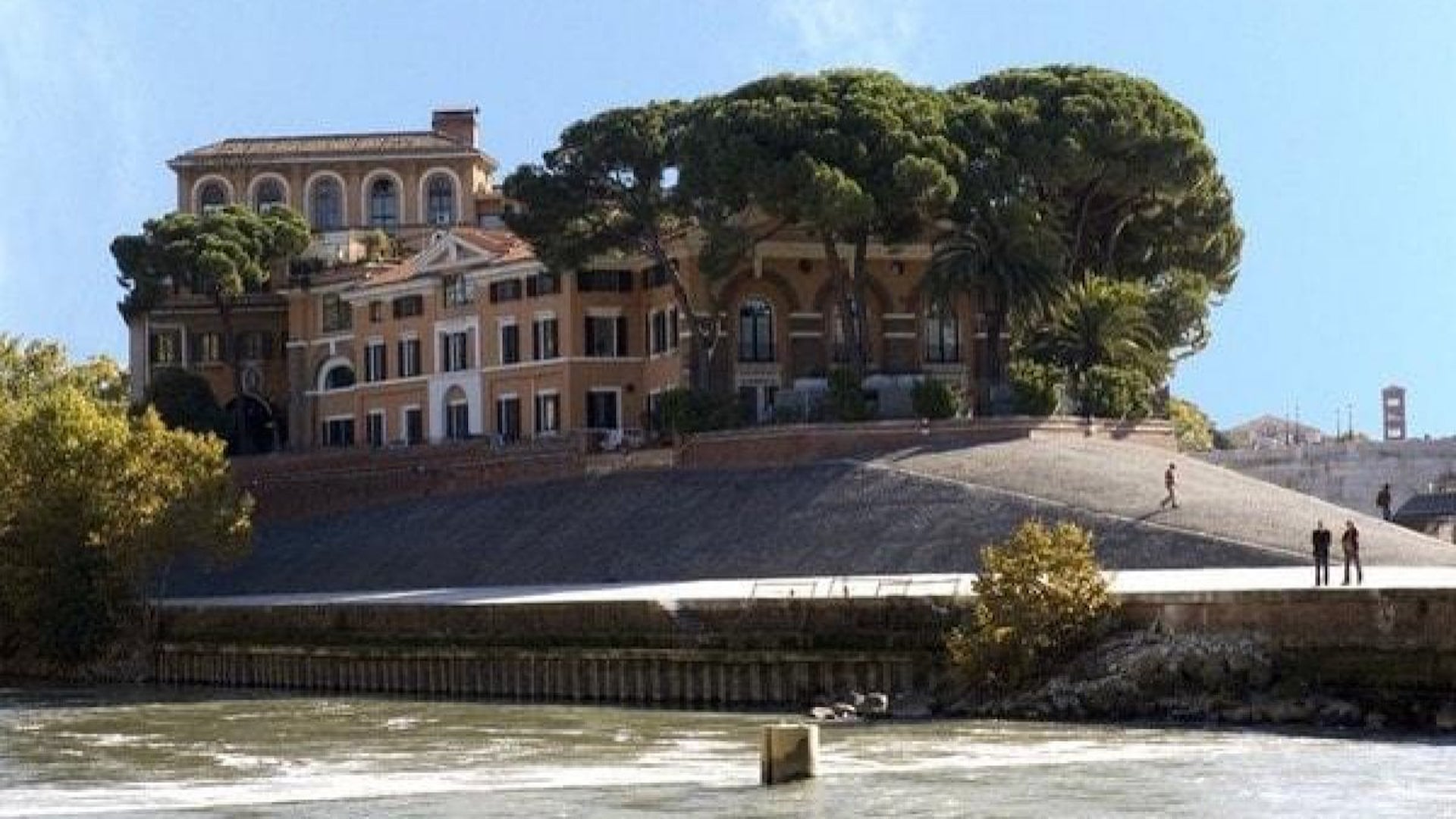
Tiberina Island, the only urban island of the Tiber, about 300 meters long and about 90 wide, is connected to the banks of the Tiber by two bridges: towards Trastevere from the Cestio bridge, dating back to 46 BC. C. and in the direction of the Ghetto with the Fabricio bridge, built in 62 BC. C., also called Ponte Quattro Capi, for the Roman herms that adorn the parapets.
According to legend, the island was born in 509 BC when, after the ousting of Lucio Tarquinio Superbo, the last king of Rome, the people, as a sign of hatred towards the tyrant, threw the king's enormous grain deposit into the Tiber, which resulted so abundant that it forms an islet.
In reality, a compact tuff bank, similar to that of the nearby Capitoline Hill, constitutes the basic geological element, on which the sands carried by the current naturally settled. Since ancient times, the need of the populations of the two banks to ford the river decreed the importance of the island, which subsequently took on a sacred character.
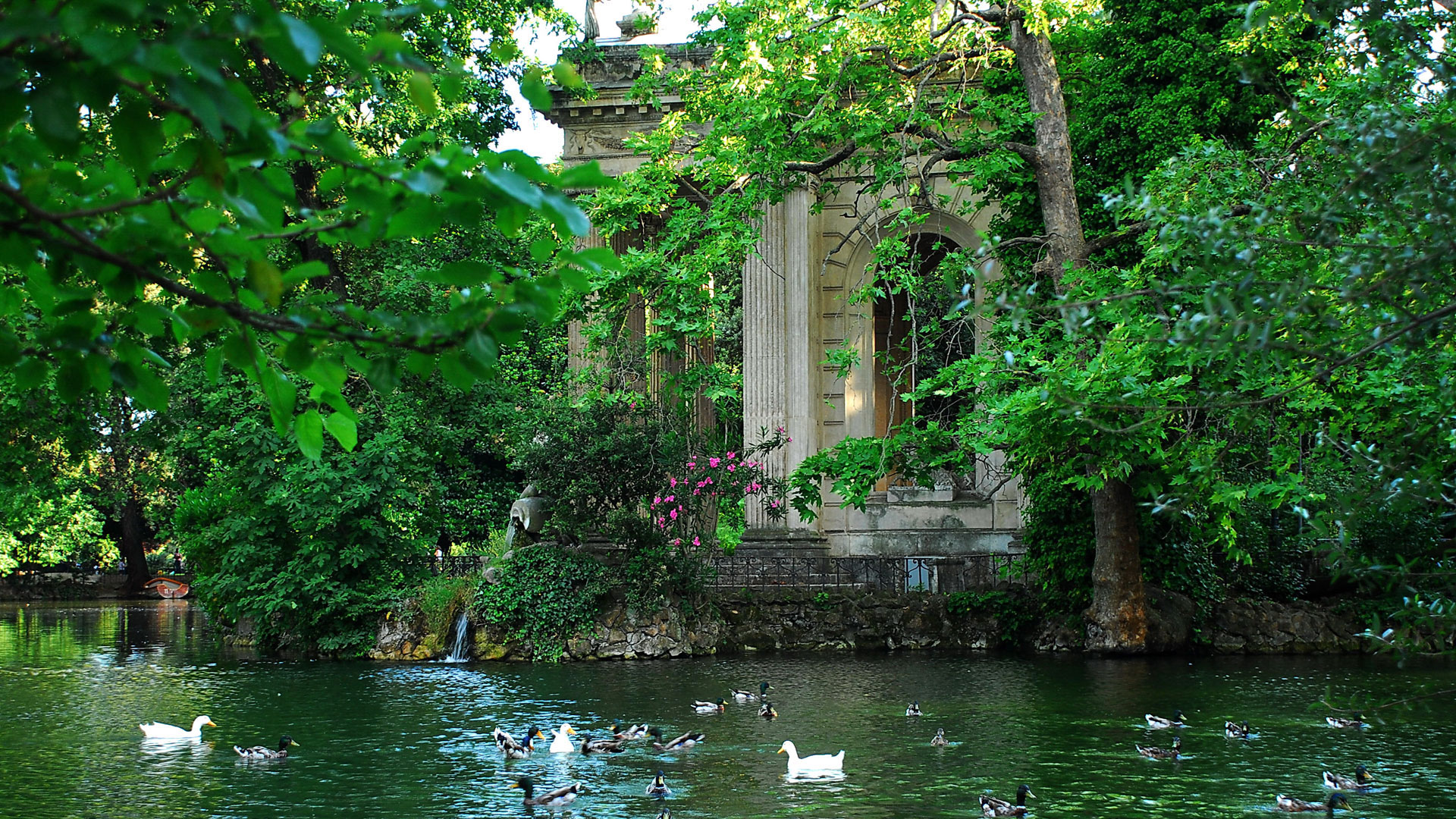
Another legend tells that, in 291 BC, when the city of Rome had been hit by a terrible plague that had claimed many victims, the priests, after consulting the Sibylline books, had sent a delegation to Epidaurus, a place of worship of the god of medicine Aesculapius. The ambassadors returned to Rome carrying on the ship a snake, an animal dear to the god. At the height of the Tiber island, the snake jumped and at the point where it took refuge, a temple dedicated to Aesculapius was erected; the island itself was architecturally arranged as a ship with stern and bow and in the middle an obelisk representing the mainmast.
The church of San Bartolomeo all'Isola was then built on the remains of the Roman temple, which preserves a 12th century Romanesque bell tower and a column excavated and used as a well. The ancient medical vocation of the island continues in the Middle Ages and continues today with the “Fatebenefratelli†hospital, born in 1584 and still active, and the Israelite hospital.