 30 Minutes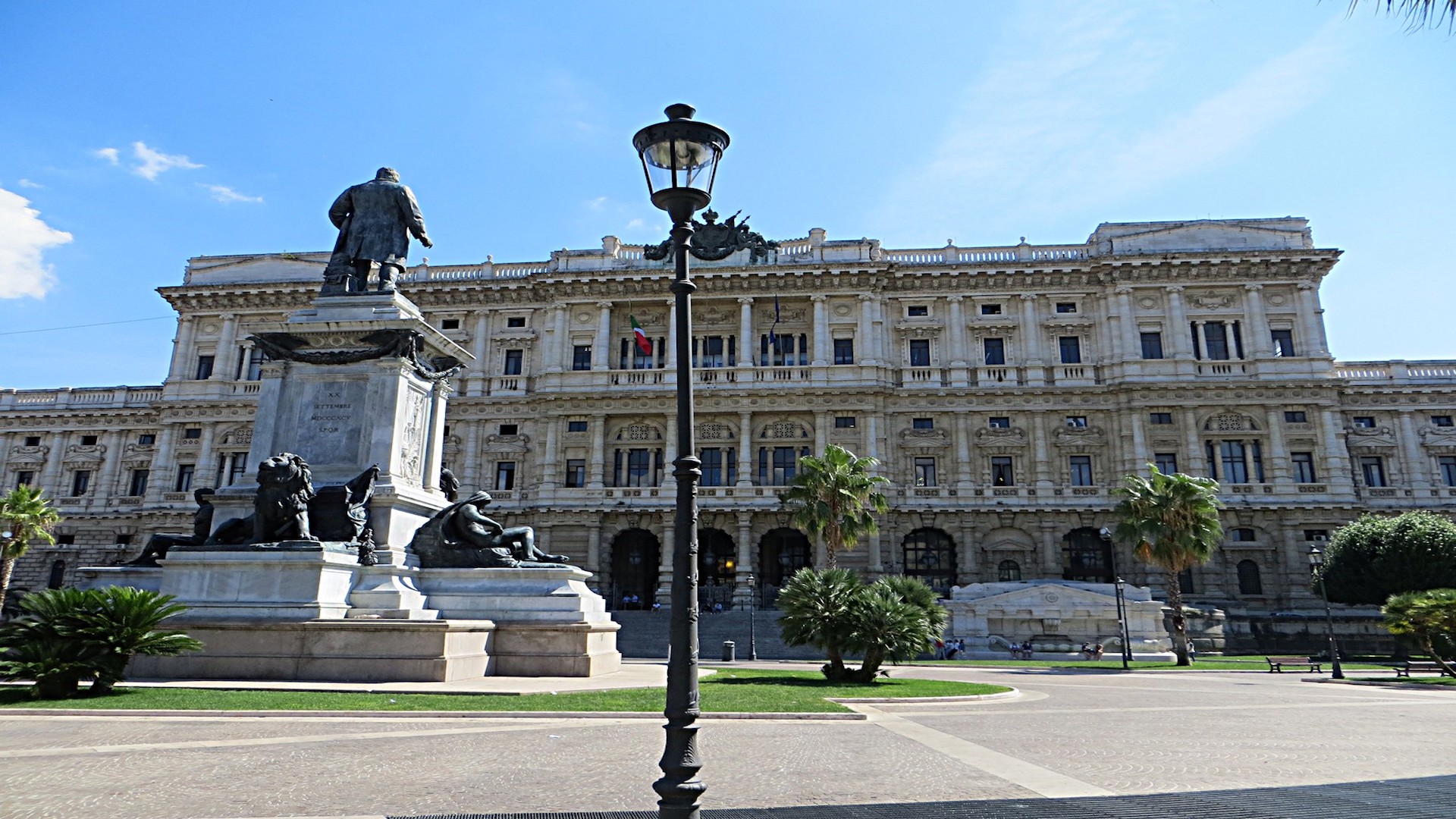
Seat of the Supreme Court of Cassation and the Council of the Bar Association of Rome, the Palazzo di Giustizia is also known as "Palazzaccio", a nickname given to it by the Romans because of its size.
Built between 1889 and 1911 by the architect Guglielmo Calderini, is one of the monumental works created after the proclamation of Rome as the capital of the Kingdom of Italy. During the foundation works, the muddy sands of the river returned two sarcophagi dating back to around 150-170 AD, belonging to members of the same family: that of a young girl, Crepereia Tryphaena, now exhibited at the Centrale Montemartini, and that of Crepereio Euhodo . The most exceptional discovery, however, consists in the discovery of an object that belonged to the girl, an ivory doll, about 23 centimeters high, with a finely sculpted face and a rich but above all articulated hairstyle, which demonstrate a high level of craftsmanship. The building, which has a reinforced concrete structure, is covered in travertine; on the main facade, facing the Tiber, there is a large triumphal arch which constitutes the access portal, surmounted by the sculptural group of "Justice", depicted seated between the symbolic figures of the "Law" and "Strength". The façade, consisting of a central body and two lateral ones, has other colossal statues, the work of different sculptors, depicting "Cicerone", "Papiniano", "De Luca" and "Vico" standing on either side of the entrance, while seated there. they are "Licinio Crasso" and "Salvo Giuliano". On the sides of the three large windows above the central arch there are two winged figures representing the "Force"