 40 Minutes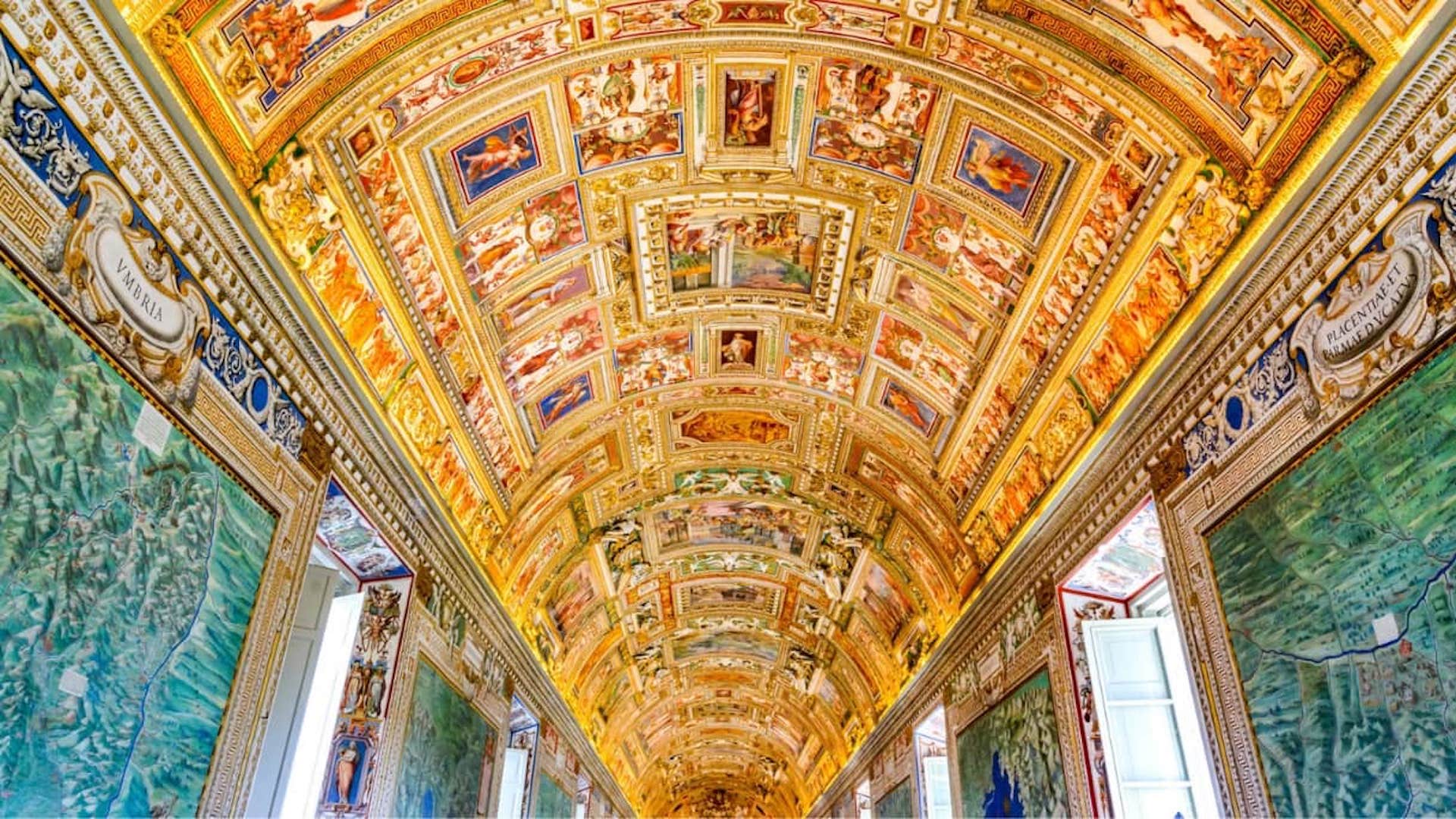
The first nucleus, a collection of ancient sculptures, was constituted by Julius II (1503-13), even if the idea of ​​the museum was born with Clement XIII (1758-69), who with the assistance of Winckelmann had the Profane Museum set up , which exhibits Greek and Roman sculptures.
With Clemente XIV (1769-74) and Pius VI (1775-99) the Pio Clementino Museum was born, which collects the most famous examples of ancient sculpture such as the Apollo of the Belvedere, the Laooconte group and the Belvedere Torso. In 1807-10, under Pius VII, the Chiaramonti Museum was set up by Canova, where Roman sculptures are housed. In 1822, the New Arm was opened with over 150 sculptures, including statues such as the Wounded Amazon, the Doryphoros, the huge statue of the Nile, the Augustus of Prima Porta. Thanks to Pope Gregory XVI respectively, in 1837, they opened the Gregorian Etruscan Museum, with finds coming mostly from the nineteenth-century excavations carried out in southern Etruria, and in 1839, the Egyptian Gregorian, which collects a series of statues depicting divinities or characters of the royal family, sarcophagi, mummies and elements of funerary furnishings. In 1844 he opened the Lateran Profane Museum (today Gregorian Profane) and later the Pio Cristiano which collects materials from excavations in the Roman catacombs including numerous sarcophagi. The preparation of the Ethnological Missionary Museum dates back to the first decades of the 1900s, which documents the religious manifestations and cults of the other continents; moreover, the Pinacoteca opens to the public, where works dating from the 12th to the 18th century are preserved, created by artists such as Lorenzetti, Martini, Giotto, Beato Angelico, Filippo Lippi, Perugino, Pinturicchio, Tiziano, Carracci, Caravaggio, Poussin, G. Reni and Guercino. In 1973, Paul VI inaugurated the Historical Museum and the Collection of Modern Religious Art, partly set up in the rooms of the Borgia Apartment, decorated by Pinturicchio, which exhibited works by Rosai, Boccioni, Balla, De Chirico, Guttuso, Manzù. The collections are completed by the Vatican Library Museum and the works exhibited in the three galleries: Galleria dei Candelabri, with archaeological material from the Roman era, the Galleria degli Arazzi, with Roman and Flemish tapestries, and the Gallery of Geographical Maps, with 40 fresco panels dedicated to the territory of Italy, executed in 1580-83. The tour includes the incomparable Sistine Chapel, whose name originates from Pope Sixtus IV della Rovere, pontiff from 1471 to 1484, who had the ancient Magna Chapel renovated between 1477 and 1480. The splendid fifteenth-century decoration of the walls , which includes the fake curtains, the Stories of Moses and Christ and the portraits of the Popes, was executed by a team of painters, initially constituted by Pietro Perugino, Sandro Botticelli, Domenico Ghirlandaio, Cosimo Rosselli, assisted by their respective workshops and by some close collaborators, among which Biagio di Antonio, Bartolomeo della Gatta and Luca Signorelli stand out. On the vault, Pier Matteo d'Amelia painted a starry sky. The execution of the frescoes, which began in 1481, ended in 1482, the period of the realization of the marble works, such as the transenna, the choir loft and the papal coat of arms above the entrance door. On 15 August 1483, Sixtus IV consecrated and dedicated the new chapel to the Assumption. Subsequently, his nephew Giulio II della Rovere, pontiff from 1503 to 1513, decided to modify the decoration, entrusting the task to Michelangelo Buonarroti in 1508. The artist painted the vault and the lunettes, completing the work in October 1512. The nine central panels depict the Stories of Genesis, from Creation to the Fall of man, the Flood and the subsequent rebirth of humanity with Noah's family. The Pope inaugurated the chapel on All Saints' Day with a solemn mass. Towards the end of 1533, Pope Clement VII de 'Medici commissioned Buonarroti to further modify the decoration, painting the marvelous Last Judgment on the altar wall. Michelangelo began the grandiose work in 1536, during the pontificate of Paul III, and brought it to completion in the autumn of 1541, although the realization of the work led to the loss of the fifteenth-century frescoes of the altarpiece with the Virgin of the Assumption between the Apostles and the first two episodes from the stories of Moses and Christ, painted by Perugino. In the second half of the sixteenth century the Resurrection of Christ by Ghirlandaio by Hendrik van den Broeck and the Dispute over the body of Moses by Signorelli by Matteo da Lecce were re-executed, both frescoes on the entrance wall, severely damaged by the collapse of the door in 1522. Completely restored between 1979 and 1999, the Sistine Chapel is still today the seat of the Conclave for the election of the Supreme Pontiff. On the last Sunday of each month the museums are open and free.